
As hurricane season approaches, it's crucial to ensure the safety of your property, including your…

How Do I Prepare My Heat Pump Pool Heater for a Hurricane?
With hurricane season upon us, we have received many questions from customers about protecting their heat pump from the storm. Our systems do not require specific preparation for such weather systems. However, there are steps that can help protect your pool equipment, including your heater, in case of a storm. We will go over some pool preparation steps in this article.
Pool Preparation Before The Storm
- Increase your chlorine level to 10 ppm, the extra chlorine will protect the water. Your filtration and sanitization system will likely be turned off for an extended period of time. This will be dependent on power availability.
- Turn off the electrical power to ALL pool equipment at the circuit breaker.
- To prevent water damage to your pump motor, cover it in plastic bag or any waterproof material you have available. Also check that it is properly secured.
- A pool can float out of the ground when the ground around it becomes over-saturated. To prevent this from happening, DO NOT drain any water from your pool. The weight of the water in the pool will help hold it in place.
- Prune dying or weak branches around your pool equipment to minimize debris and damage to your pool and equipment.
Pool Preparation After The Storm
After receiving clearance to return to your home, or the storm has passed, manually clear out any large debris. Follow these next steps to ensure the area is safe.
First, check for any downed power lines and ensure all electrical equipment and lines are clear, dry, and safe. Before turning on the power to the equipment, uncover the pump motor. The following items in and around your heater should be thoroughly inspected before starting up:
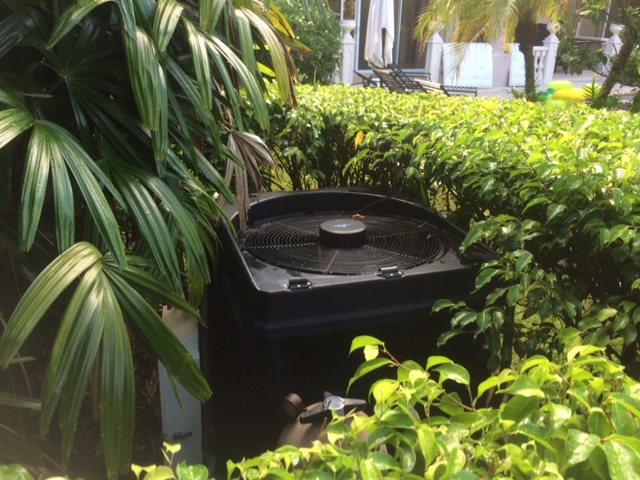
- Inspect the fan grille and fan assembly to ensure debris has not entered the heater. Remove branches, twigs, sticks, and leaves caught in the fan grille assembly. If there is damage to the fan grille assembly, do not restore power to the heat pump. Wait to turn on your heat pump after an inspection by a qualified technician and repairs have been made.
- Inspect all plumbing and electrical connections for physical damage.
- Inspect for evidence of high-water levels that have since receded. Do not restore power to your pool system if there is any indication of high-water levels. Wait until a qualified technician inspects it to determine if damage to electrical components has occurred.
- If you notice any error codes on your pool heater or other pool equipment, refer to your products operation manual. This will help determine what to check for before calling technical support. If you have any doubts regarding the electrical system, call a pool professional. They can confirm that it is safe to re-start your system.
Water Chemistry:
Once your system is back up and running, it is time to turn your attention to the water chemistry in your pool water, due to all of the rainwater, you might need to re-balance the chemicals.
Utilizing the chart below, you will be able to determine your pool water balance. Water is properly balanced if the SI (Saturation Index) is 0 ± 0.3. If SI is greater than 0.3, scaling and staining will occur. If SI is less than -0.3, then the water could be corrosive to metallic fixtures and aggressive on some plaster surfaces and vinyl liners.
When the SI (Saturation Index) is too high or low it can also cause damage to the pool finish or your swimming pool equipment. The basic rule is: high calcium concentration, total dissolved solids, pH, and alkalinity all promise a greater tendency for scale. Scaling potential also increases with higher temperatures.
pH + TH + CF + AF + SC + Saturation Index
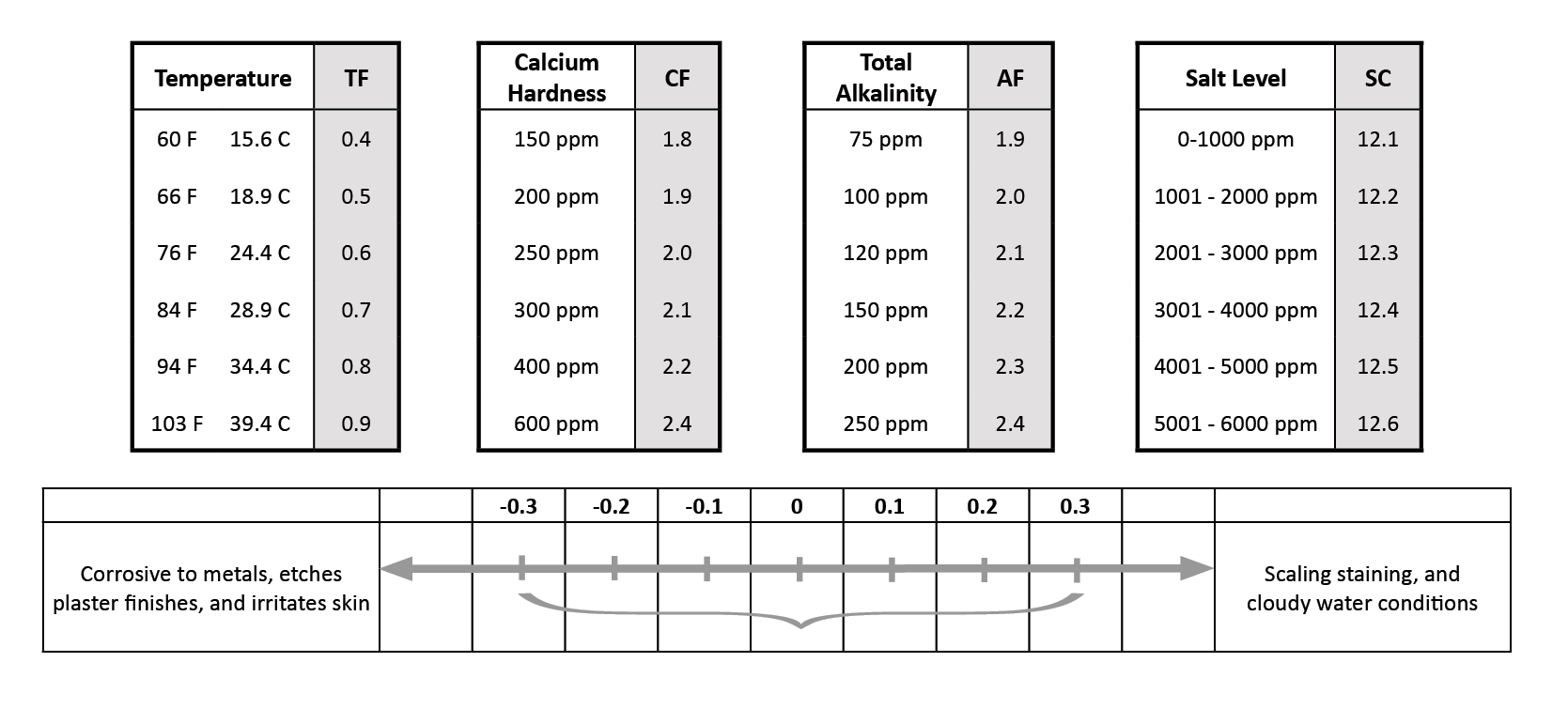
Once you have determined your balance levels, take the proper corrective actions should be taken to rectify, if necessary. The following chart provides you with the recommended chemistry ranges as well as corrective actions for your reference:
[table id=83 /]
To read more on the proper levels of chemicals in a swimming pool please click here.

Related Posts

How do you ship your pool heaters from warehouse Fedx?
Hello,
We use many different carriers to ship our heat pumps.
Thanks,
AquaCal Tech Support
Really, Great article
Thanks Ayan!
Preparing a pool heater is not an easy job specially in tropical storm so we should care more while preparing pool heater.
Thanks Eliza!
The most common harm done to a pool amid a hurricane is with the filter system- -particularly with pumps that get to be submerged in water.In the event that your filter system has any possibility of being 'under water',it's best just to take your pump off of the system and put it away.
^^^^^^^^^^^^^^^^^^^^^^
Emergency Plumbers Cheltenham
Thank you Linda, appreciate your comment!
Great article!
Thank you Micky!
We're lucky we don't get too many hurricanes in the UK – on the other hand though we do have to deal with rain most of the summer. Good article for those who need to prepare. Thanks
Thank you Tom!